
Bracelet style reference
Bracelet
styles.
A focused comparison of 11 useful bracelet designs—from tennis bracelets, bangles, cuffs, and bypass forms to bar and gemstone cluster bracelets.
Start with the construction
How the bracelet surrounds the wrist.
A bracelet style is shaped by its structure: rigid or flexible, open or closed, linked or continuous, plain or stone-set, and fixed-size or adjustable.
Names can overlap. A tennis bracelet is also a flexible line bracelet, a bangle may be hinged and pavé-set, and cluster motifs can be joined through articulated links.
Visual reference
Eleven styles,
two focused views.
The guide concentrates on structured and diamond designs, with the gemstone cluster bracelet retained as the most useful additional decorative style.
Structured & diamond styles
Line bracelets, bangles, cuffs, and other forms defined by structure and wrist profile.
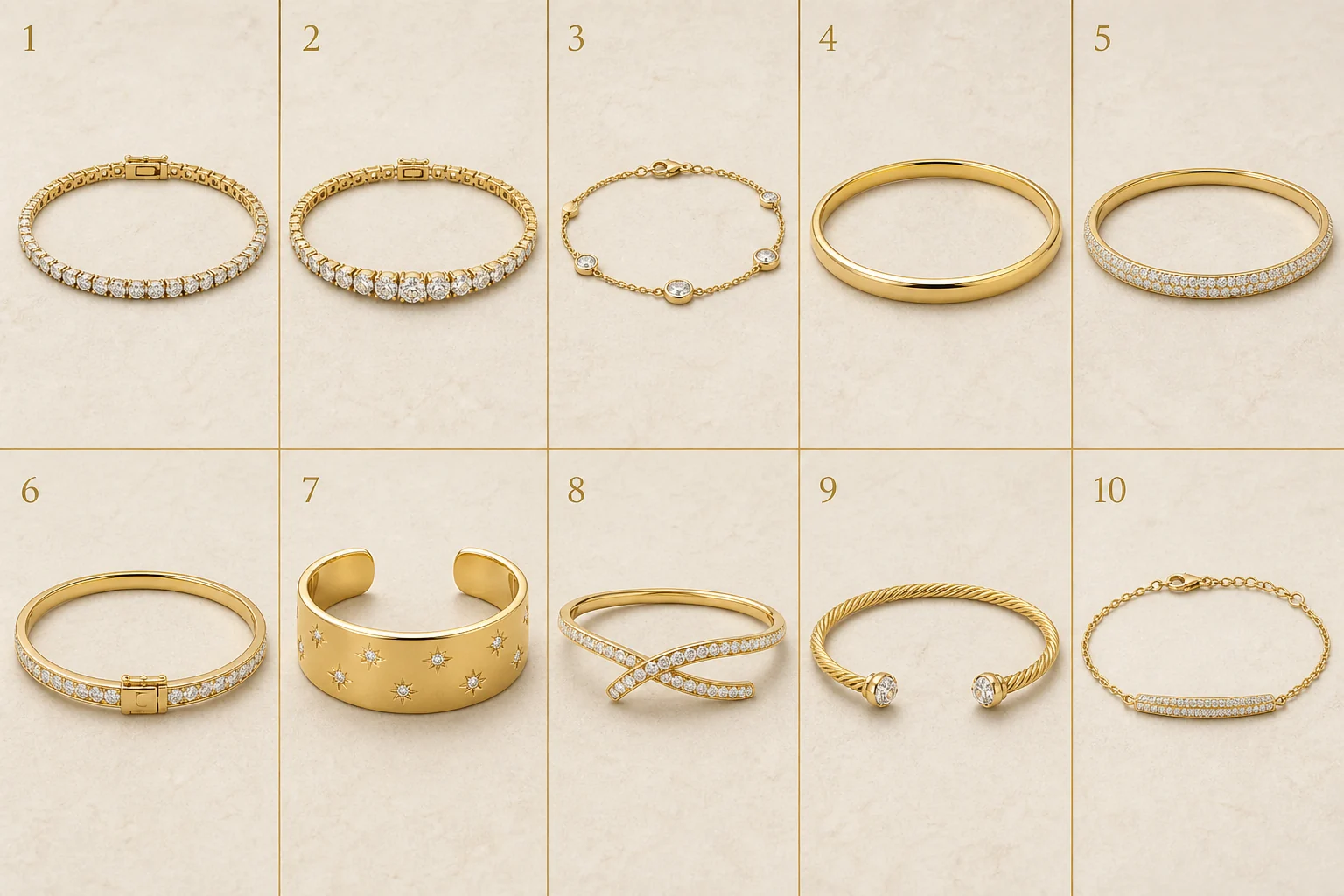
- 01Tennis bracelet
- 02Graduated tennis
- 03Station bracelet
- 04Classic bangle
- 05Pavé bangle
- 06Hinged bangle
- 07Open cuff
- 08Bypass bracelet
- 09Torque bracelet
- 10Bar bracelet
Gemstone cluster style
A flexible bracelet built from repeated diamond and colored-gemstone cluster motifs.
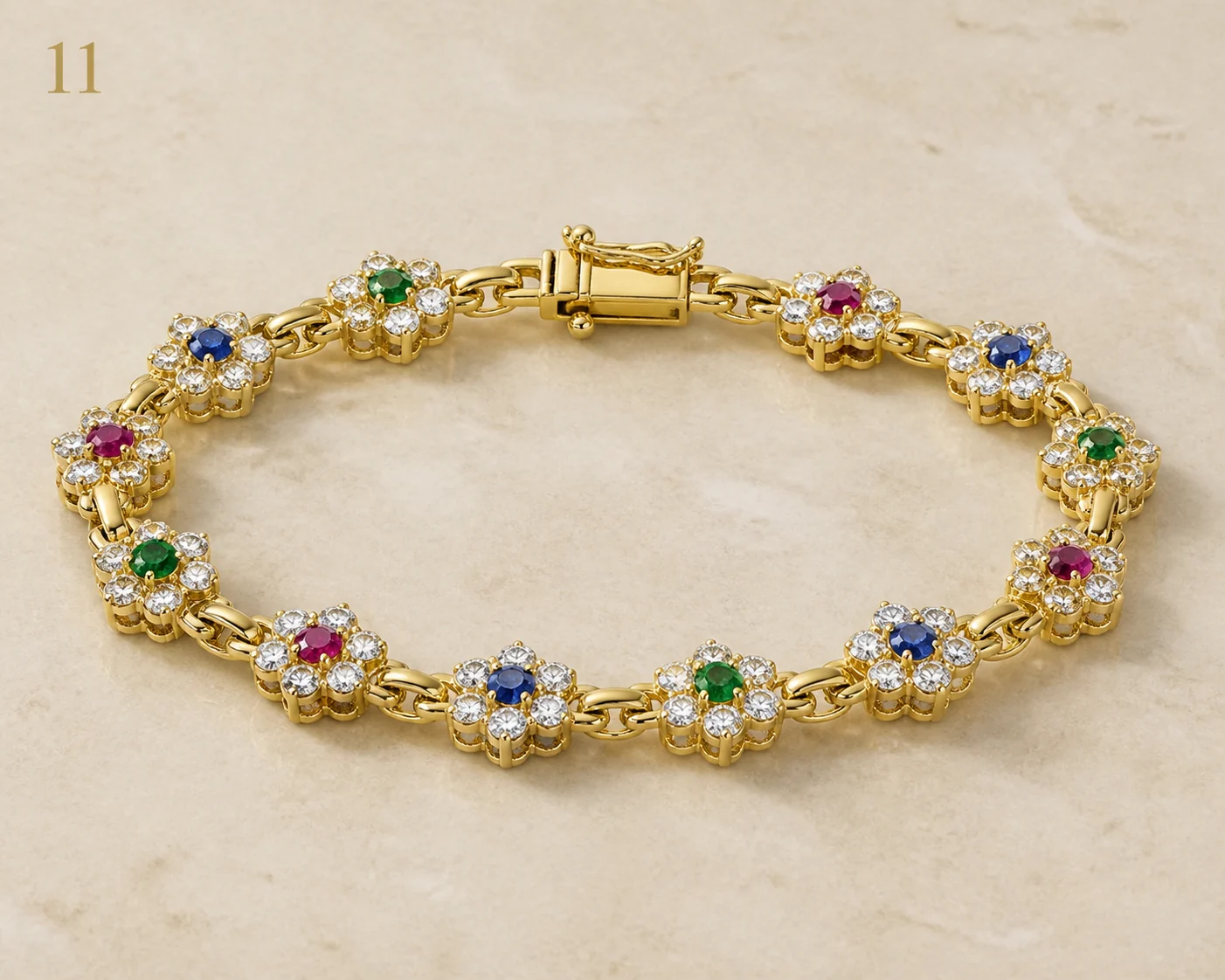
- 11Cluster bracelet
Recognizable constructions
Eleven styles
to compare.
A style establishes the direction. Wrist size, material, stones, articulation, and closure determine how it becomes a production-ready bracelet.
Tennis bracelet
A flexible, continuous line of individually set diamonds or gemstones encircles the wrist.
Graduated tennis
A tennis bracelet increases in stone size toward the center for a more pronounced focal point.
Station bracelet
Individual stones or motifs are spaced at intervals along a fine chain.
Classic bangle
A rigid, continuous circular or oval form slips over the hand without a hinge.
Pavé bangle
A rigid bangle carries a closely set surface of small diamonds or gemstones.
Hinged bangle
A hinge and clasp allow a rigid bracelet to open and close around the wrist.
Open cuff
A broad rigid form leaves a controlled opening and creates an architectural wrist profile.
Bypass bracelet
Two ends cross or sweep past one another rather than meeting in a straight closure.
Torque bracelet
A slender open metal form curves around the wrist and finishes with defined end caps.
Bar bracelet
A horizontal metal or stone-set bar forms the focal point on a fine chain.
Cluster bracelet
Grouped diamonds and gemstones form repeated floral, organic, or geometric focal arrangements.
Before choosing a style
Design for the wrist
and daily movement.
The right construction should create the intended look while remaining secure, balanced, comfortable, and serviceable.
Wrist size & fit
The finished length, inside circumference, width, and intended movement should be confirmed for the wearer and bracelet structure.
Flexibility & articulation
Links, stone settings, hinges, and joints need enough movement to follow the wrist without binding or overturning.
Clasp & security
The closure and any safety features should suit the bracelet’s value, weight, width, and expected frequency of wear.
Weight & durability
Metal volume, link thickness, stone exposure, and contact with surfaces influence comfort, maintenance, and long-term service.