
Illustrated reference
Components
of a ring.
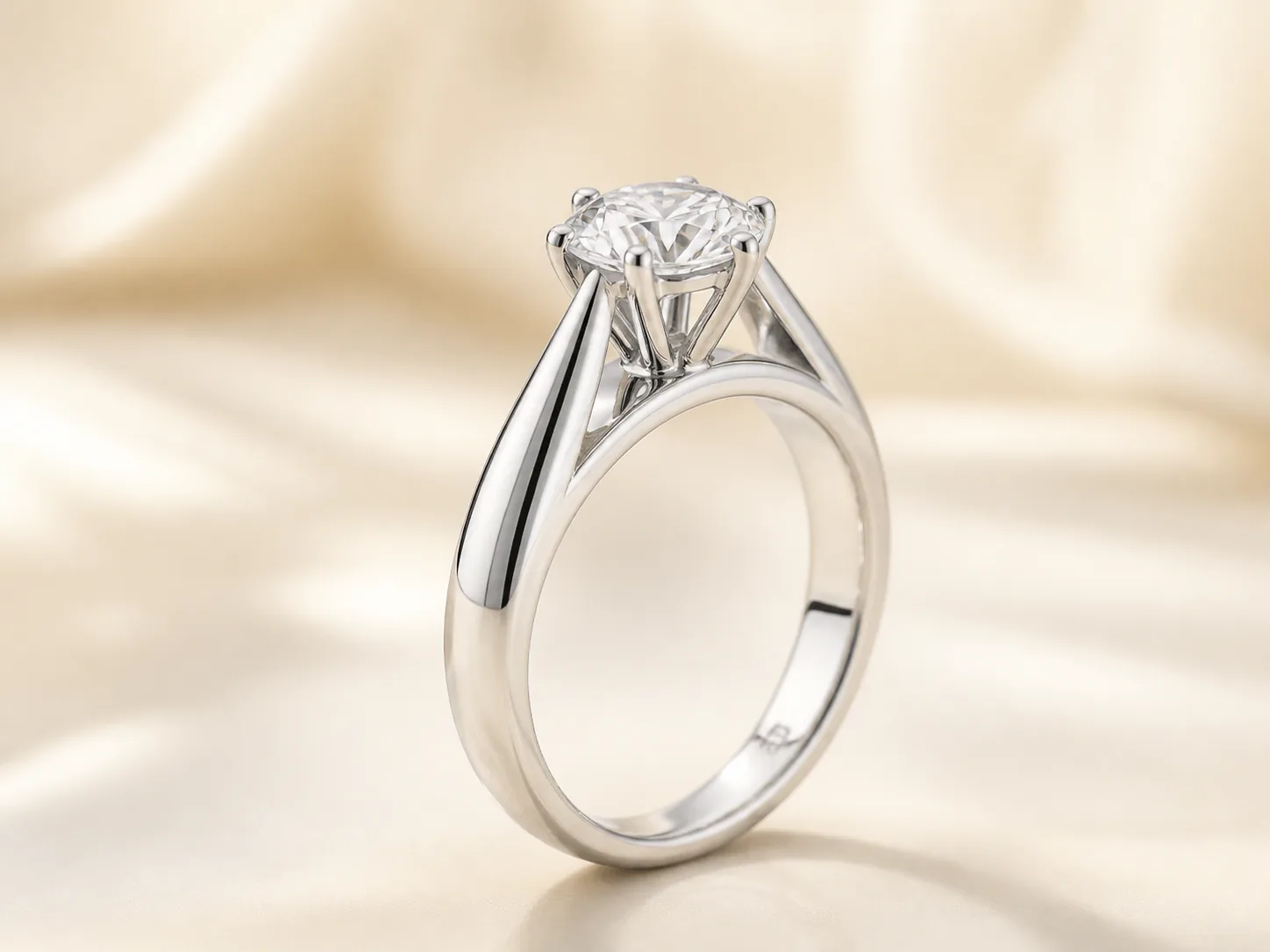
A shared vocabulary helps jewelers, designers, CAD teams, setters, and customers discuss the same details clearly. This guide uses a cathedral-style solitaire to identify the principal parts of a ring.
Ring anatomy
The parts working
together.
 0102030405060708
- 01Center stoneThe principal diamond or gemstone.
- 02ProngsThe metal arms touching and securing the stone.
- 03HeadThe complete structure holding the center stone.
- 04GalleryThe open area directly beneath the center stone.
- 05Cathedral shouldersThe raised sides sweeping upward toward the head.
- 06ShankThe circular body that surrounds the finger.
- 07HallmarkThe small quality or maker’s mark inside the ring.
- 08Sizing areaThe lower shank where resizing is commonly performed.
Terminology can vary slightly by design and manufacturer. The labels above identify the components visible in this example.
Why anatomy matters
Designed as one
complete structure.
Stone security
The head, prongs, gallery, and supporting shoulders must work together to hold the stone appropriately for the design.
Comfort & wear
Shank profile, setting height, edges, and proportions affect how the finished ring feels and performs in daily use.
Future service
A considered sizing area and accessible construction make cleaning, inspection, repair, and resizing more manageable.