
Engagement-ring reference
Engagement-ring
styles.
A practical comparison of 12 designs customers commonly recognize, from a classic solitaire to more detailed, sculptural, and vintage-inspired rings.
Start with the overall design
More than the center stone.
An engagement-ring style describes how the center stone, accent stones, setting structure, and band work together as one complete design.
These categories are useful starting points rather than strict rules. One ring may combine a halo, split shank, pavé band, and cathedral profile.
Visual reference
Twelve designs,
one view.
Use the numbered key beneath the image to connect each example with its commonly used engagement-ring style name.
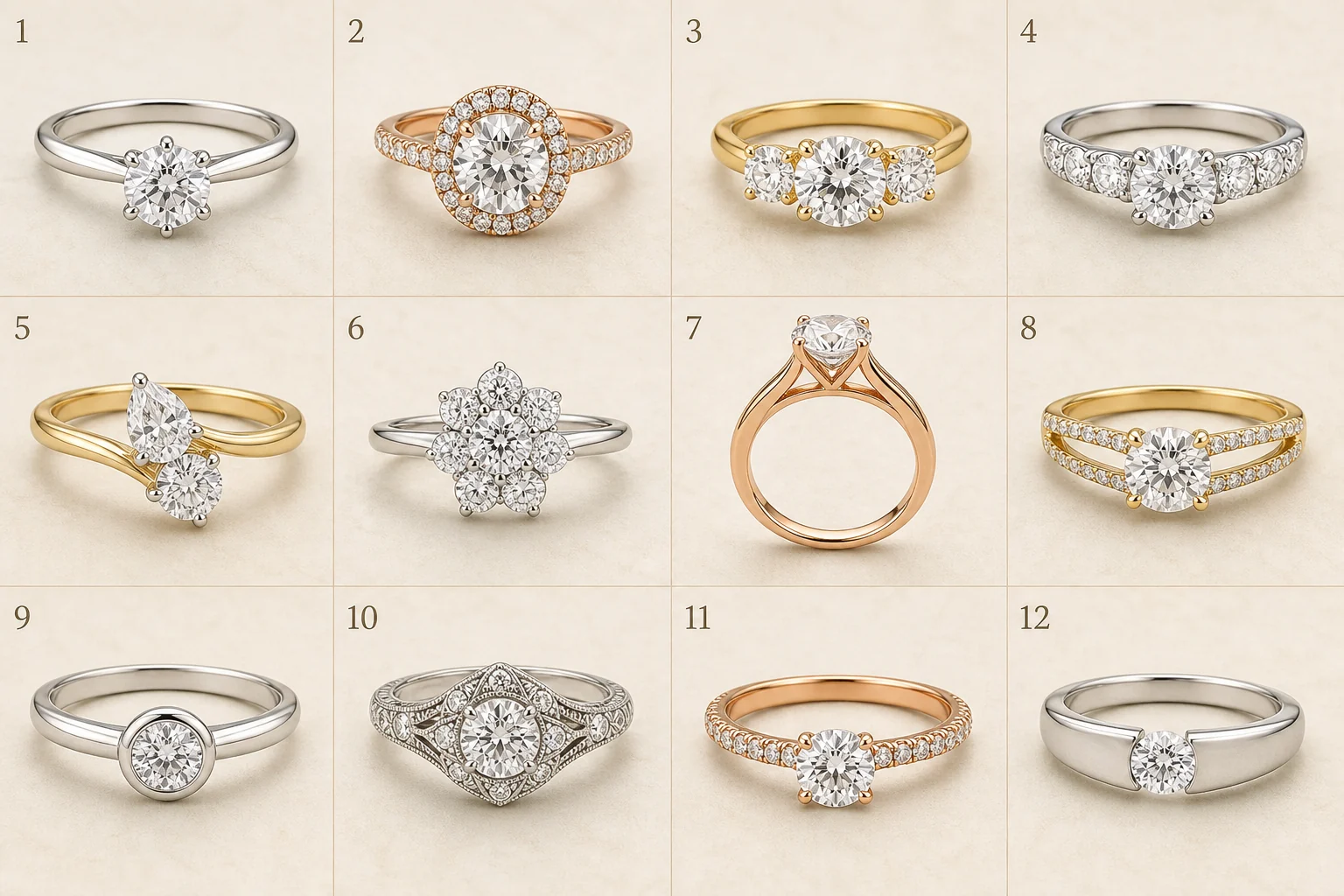
- 01Solitaire
- 02Halo
- 03Three-stone
- 04Side-stone
- 05Toi et Moi
- 06Cluster
- 07Cathedral
- 08Split-shank
- 09Bezel-set
- 10Vintage-inspired
- 11Pavé-band
- 12Tension-style
Popular engagement designs
Twelve styles
to know.
A style gives the design direction. Stone shape, setting technique, band profile, metal, and detailing determine how that direction becomes a unique finished ring.
Solitaire
A single center stone defines the ring. Its clean structure places the emphasis on the diamond or gemstone and works with many stone shapes and band profiles.
Halo
A frame of smaller stones surrounds the center stone, adding brightness and visual spread. The halo can follow the stone shape or create a contrasting outline.
Three-stone
One center stone is accompanied by a stone on each side. Matching or contrasting shapes can create either a balanced classic look or a more individual composition.
Side-stone
Accent stones extend along the shoulders beside the center. They may be matched, graduated, tapered, or arranged to lead the eye toward the featured stone.
Toi et Moi
Two featured stones meet in one design. Different cuts, colors, sizes, or stone types can be paired to create a distinctive and personal composition.
Cluster
Several stones form one focal arrangement. Floral, geometric, symmetrical, and organic clusters can create presence without relying on one large center stone.
Cathedral
Raised shoulders sweep upward toward the center setting. The structure gives the ring height and architectural support while drawing attention to the featured stone.
Split-shank
The band separates into two or more lines as it approaches the center. The opening can add width, detail, and visual balance around a larger setting.
Bezel-set
A smooth rim of metal surrounds the center stone. The streamlined outline offers protection and a clean modern appearance while reducing exposed stone edges.
Vintage-inspired
Milgrain, engraving, filigree, geometric details, and period-influenced proportions give the ring an antique character while allowing modern construction.
Pavé-band
Small diamonds or gemstones are set closely along the band to create a continuous line of sparkle that supports the center stone without overpowering it.
Tension-style
The center stone appears suspended between opposing sides of the band. True tension and tension-look designs require careful engineering and exact stone dimensions.
Before choosing a style
Plan for beauty
and daily wear.
The right design should present the stones beautifully, feel comfortable, work with the wedding band, and remain practical to maintain.
Center-stone proportions
Shape, dimensions, depth, and orientation determine the setting structure and the visual balance of the finished ring.
Everyday wear
Profile, exposed edges, prong placement, and metal thickness should suit the wearer’s routines and preferred level of maintenance.
Wedding-band fit
Plan both rings together when a close or flush fit matters. Some raised settings allow a straight band; others need a shaped or contoured band.
Future care
Cleaning access, stone checks, refinishing, resizing, and possible stone replacement should be considered before the design is approved.