
Guides Metals & gemstones

Materials reference

Precious metals
used in jewelry.

Metal affects color, weight, wear, maintenance, manufacturing, and price. Understanding the difference between a core metal, a gold alloy, and a surface finish makes specifications clearer before production begins.
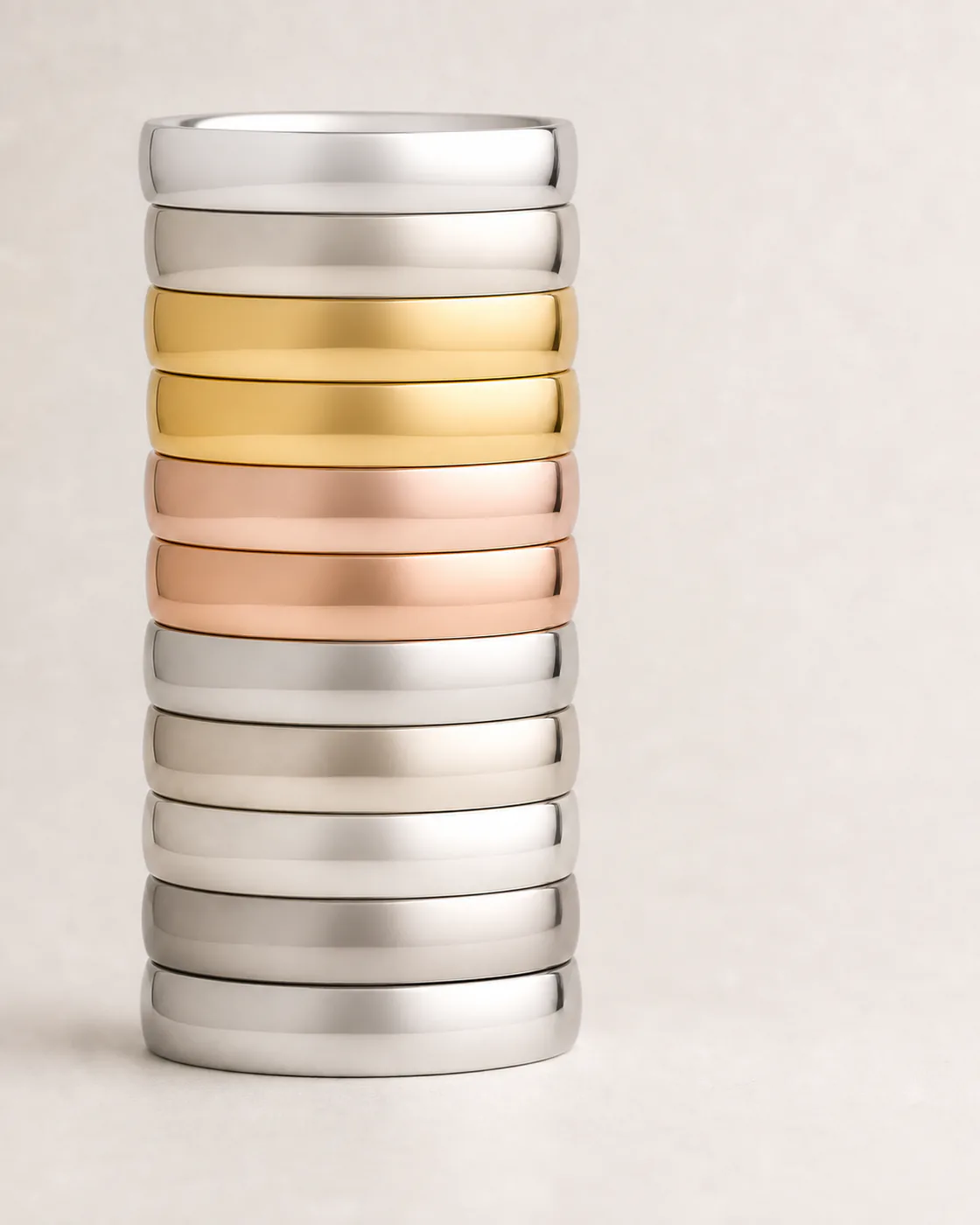
A stack of polished jewelry bands showing silver, yellow-gold, rose-gold, and white-metal tones
  1. Rhodium-plated white gold
  2. Sterling silver
  3. 14K yellow gold
  4. 18K yellow gold
  5. 14K rose gold
  6. 18K rose gold
  7. 14K white gold
  8. 18K white gold
  9. Palladium-alloy white gold
  10. Palladium
  11. Platinum

Metal color families

Similar at a glance.
Different in composition.

01

Gold alloys

Yellow, rose, and white gold begin with gold. Alloying metals adjust color, strength, working properties, and price.

02

Naturally white metals

Platinum, palladium, and silver are naturally white, but differ in purity, density, wear behavior, and cost.

03

Rhodium plating

Rhodium is commonly applied as a bright white surface layer—especially over white gold. It is a finish, not the underlying metal, and can wear with use.

The labels identify representative examples. Exact metal type and purity cannot be confirmed by color alone; alloy formula, finish, and lighting also affect appearance.

The principal choices

Know what sits
beneath the finish.

The right specification should name the metal, its purity or fineness, its color or alloy family, and any plating or finish required.

01

Yellow gold

Gold alloyed for a familiar warm color. The exact shade varies with karat and the metals used in the alloy.

Warm color · available in multiple karats
02

Rose gold

A gold alloy whose pink-to-red tone comes primarily from copper. More copper generally creates a stronger rose color.

Warm blush color · alloy-dependent
03

White gold

Gold alloyed with white metals to reduce its yellow color. Many white-gold pieces receive rhodium plating for a brighter white surface.

Gold alloy · plating may need renewal
04

Platinum

A naturally white, dense precious metal. In the United States, jewelry described simply as platinum should contain at least 95% platinum.

Naturally white · dense · high purity
05

Palladium

A naturally white member of the platinum-group metals. It may be used as the principal metal or as part of a white-gold alloy.

Naturally white · platinum-group metal
06

Sterling silver

Silver alloy containing 92.5% pure silver, commonly marked 925. It offers a bright white appearance at a more accessible material cost.

92.5% silver · commonly marked 925

Gold purity

Karat tells you
how much is gold.

Karat divides a gold alloy into 24 parts. The remaining parts are other metals used to influence color, strength, and working properties.

24K

Nearly pure gold

Richest yellow color; generally too soft for many everyday jewelry applications.

18K

75% gold

High gold content with added alloy strength and a rich color.

14K

58.3% gold

A widely used balance of gold content, durability, color, and cost.

10K

41.7% gold

Lower gold content with a larger proportion of alloying metals.

Choosing for the project

The best metal supports
the design and the sale.

01

Desired color

Start with the intended yellow, rose, bright-white, or natural-white appearance.

02

Wear & maintenance

Consider daily use, finish expectations, plating, polishing, repair, and future resizing.

03

Design requirements

Structure, stone setting, dimensions, weight, and production method can influence the practical options.

04

Commercial goal

Balance material value, manufacturing cost, customer expectations, and the retailer’s target margin.

Need help choosing the metal?

Bring the design.
We’ll review the options.

Share the design, preferred color, wear expectations, target weight, and budget direction. We’ll review practical metal options for the project.

Discuss your project
◆ Private inquiry◆ No-obligation review◆ Direct response